
Every pool surface wears out. Plaster is a cement product sitting in treated water, and the water wins eventually. The question is never whether your pool needs resurfacing, it is whether it needs it this year, and what you should put on it when it does.
We resurface pools across Los Angeles, Pasadena, Glendale, Burbank, Sherman Oaks, Arcadia and La Cañada. This page covers what the job involves, what the finish options actually cost you over time, and how to tell a surface that needs replacing from one that needs a repair.
How to tell your pool needs resurfacing
Four signs, in the order homeowners usually notice them.
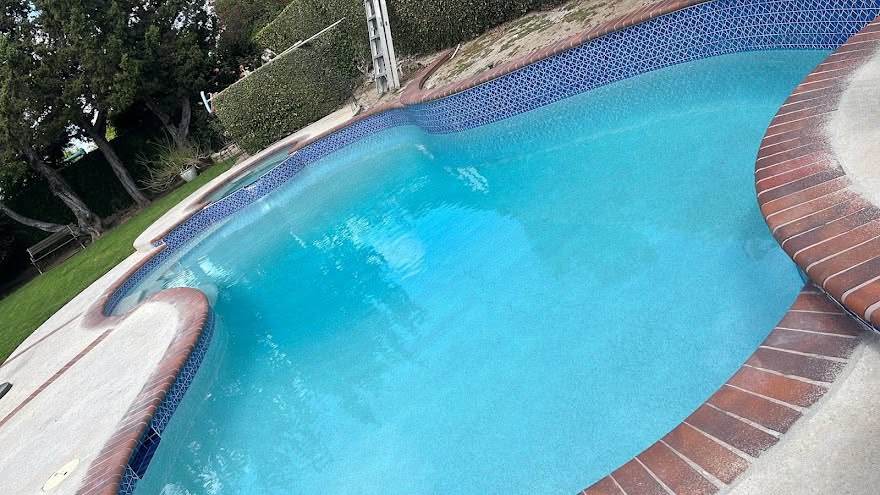
The surface feels rough underfoot
Plaster gets etched by unbalanced water. Once it feels like sandpaper, it is not a cleaning problem. The cement matrix between the aggregate has dissolved and it does not come back.
Staining that returns after every cleaning
A stain that bleaches out and comes back within weeks is usually sitting in the surface, not on it. Porous plaster holds minerals and organics in place where no brush reaches.
Chips, spalling and exposed aggregate patches
Small areas where the finish has flaked away and the grey shell shows through. Individually these are repairs. Once they appear in several places at once, you are watching the whole surface fail.
Water loss you cannot explain
A crack in the shell leaks. A failing surface does not, usually. If you are adding water and your equipment is sound, that is a structural question and it has to be answered before any resurfacing work is worth paying for. We will tell you that rather than resurface over it.
What the job actually involves
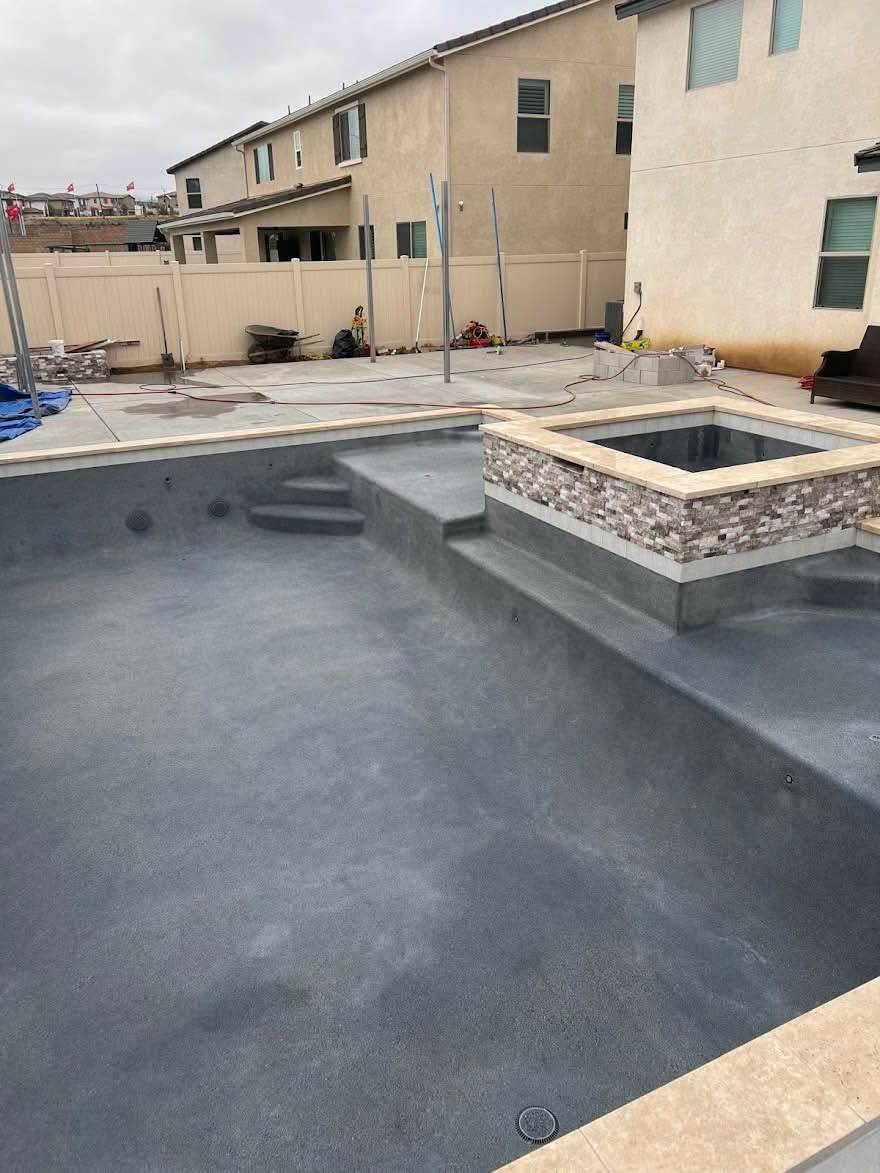
Resurfacing is not a coating applied over the old finish. The old material comes off.
- Drain. The pool is emptied. Timing matters in a high water table and it is not always a same-week decision.
- Prep. The existing finish is chipped out or sounded and cut back to a surface the new material will bond to. This is the step that decides whether a resurface lasts, and it is the step cheap quotes skip.
- Repairs to the shell. Cracks, hollow spots and plumbing penetrations get addressed while the pool is open and visible. Leaving them is how a new finish fails in two years.
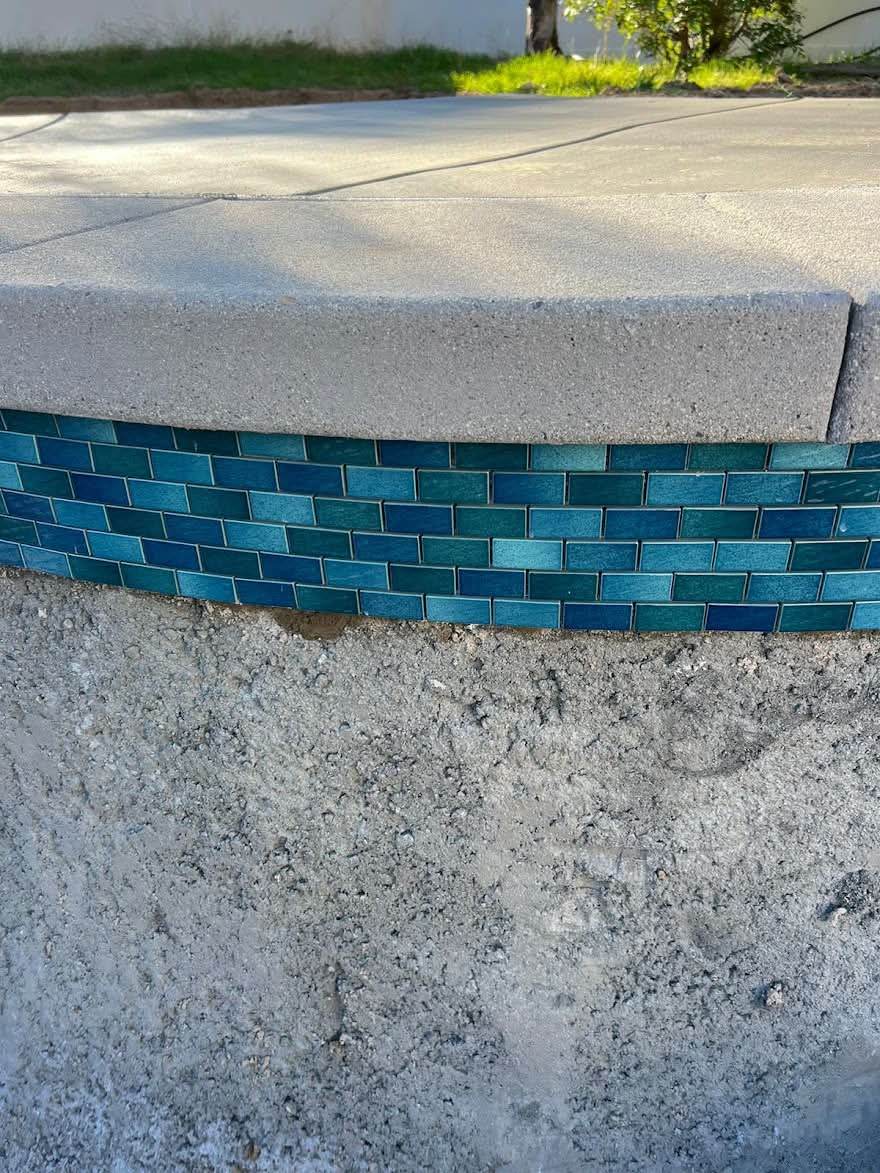
- Tile and coping, if they are part of it. Waterline tile is far cheaper to replace while the pool is already drained. If your tile is tired, do it now rather than in three years.
- The new finish. Pebble, quartz or plaster, applied and troweled.
- Start up and water chemistry. The first two to four weeks decide how long the new surface lives. Brushing schedule and balanced water are not optional, and we will tell you exactly what to do.
Which finish to put on it
Three families, and the right answer depends on how long you plan to own the pool.
Plaster is the traditional finish and the lowest cost up front. It is smooth, it is familiar, and it has the shortest life of the three. Industry general guidance puts plaster in the range of seven to twelve years depending heavily on water chemistry. If you are selling within a few years, plaster is a rational choice. See pool replastering for what that job involves on its own.
Quartz is plaster with quartz aggregate blended in. Harder, more stain resistant, more colour depth, and it holds its look longer than plaster for a moderate step up in cost.
Pebble is the longest lasting of the three and the most expensive. Exposed small stone, textured underfoot, and industry general guidance commonly puts it at fifteen to twenty years or more. If you are staying in the house, pebble is usually the cheaper finish measured per year rather than per job.
Those lifespans are industry generalities, not a warranty and not a promise about your pool. Water chemistry moves them more than the product choice does. Compare the pebble and quartz blends we install to see the colour range.
Resurfacing or repair
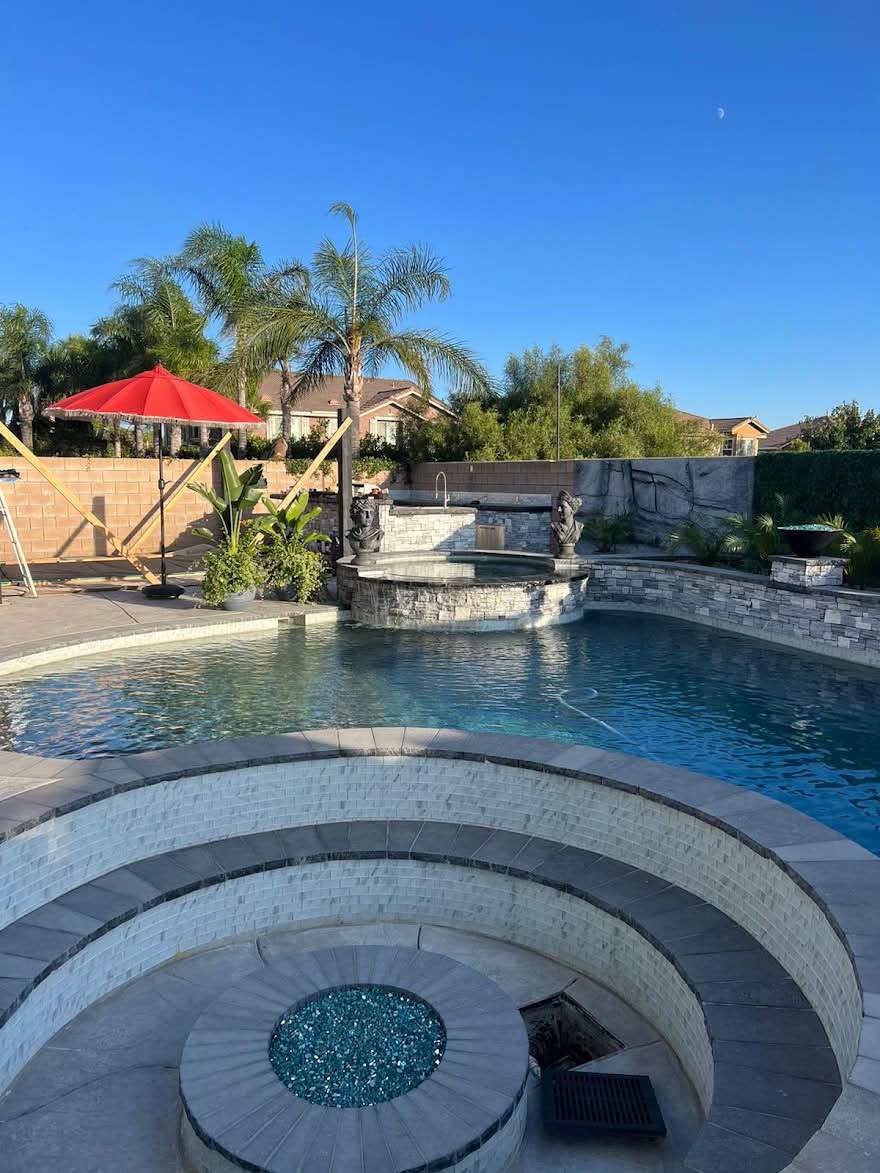
Not every failing pool needs a full resurface. A handful of chips, a cracked tile line or a worn spot at the steps are repairs, and a contractor who quotes a resurface for a repair is selling you the bigger job. We will tell you which one you are looking at before we quote. If it is the smaller job, see pool repair.
Where we work
Los Angeles and the surrounding San Gabriel Valley and east San Fernando Valley: Pasadena, Glendale, Burbank, Sherman Oaks, Arcadia and La Cañada. If you are nearby and not on that list, call and ask.
Get a straight answer on your pool
Send a few photos of the surface and the waterline and we will tell you whether you are looking at a repair or a resurface, before anyone comes out. Request a quote or call (714) 584-7424.
Tell us about your pool
Photos of the surface and the waterline are enough to start. We will tell you what you are looking at before anyone comes out.