
Replastering is the most common pool resurfacing job in Los Angeles, because most pools here already have plaster and plaster is what wears out first. If your pool was built before the aggregate finishes became common, this is almost certainly the job you are looking at.
It is the same work as a full pool resurfacing, narrowed to one material. The old plaster comes out, the shell gets looked at properly while it is open, and new plaster goes on. What follows is how to tell you have reached that point, what the work involves, and when a patch is the better buy.
When plaster has reached the end
Plaster does not fail suddenly. It gives you several years of warning and most of the warnings get read as cleaning problems.
- Rough underfoot. Unbalanced water etches the cement that holds the surface together. Once it feels like sandpaper, the material between the aggregate is gone.
- Staining that returns. A stain that bleaches out and comes back within weeks is in the surface rather than on it, and no brush reaches it.
- Exposed grey patches. Where the white has flaked away and the shell shows through. One or two are repairs. Several at once is a finish at the end of its life.
- Plaster dust in the water after brushing. This is the one most people miss. That cloud is not dirt, it is your surface coming off in suspension.
What replastering involves
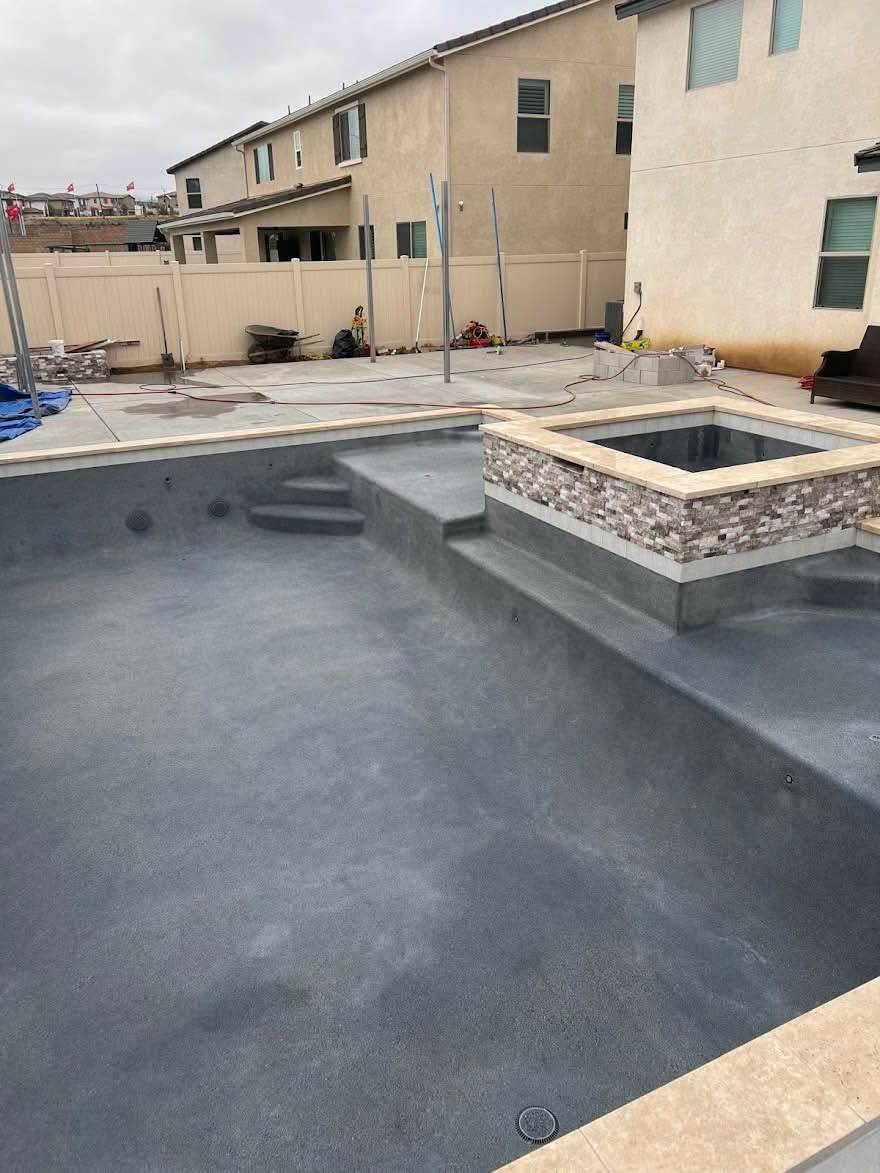
The old plaster comes out. It is not coated over. A finish applied over failing plaster fails with the plaster underneath it, on your money.
The pool is drained, the old material is chipped out and the shell is cut back to something new plaster will bond to. Cracks, hollow spots and plumbing penetrations get addressed while everything is visible, because a shell problem left under a new finish is a finish that fails in two years. New plaster is applied and hand troweled, then the pool is refilled and started up.
The first two to four weeks after a refill decide how long the surface lives. Brushing and balanced water are not optional in that window, and we will tell you exactly what to do rather than leave you to find out.
How long new plaster lasts
Industry general guidance puts plaster in the range of seven to twelve years, and that range is almost entirely a water chemistry story rather than a product story. Low calcium hardness and a low pH held there for months will take years off any cementitious finish. We have seen plaster pass twelve years in good shape and we have pulled out plaster that was finished at seven.
Those figures are industry generalities, not a warranty and not a promise about your pool.
If you would rather not do this again in a decade, pebble and quartz finishes last considerably longer for more up front.
Plaster repair compared with full replastering
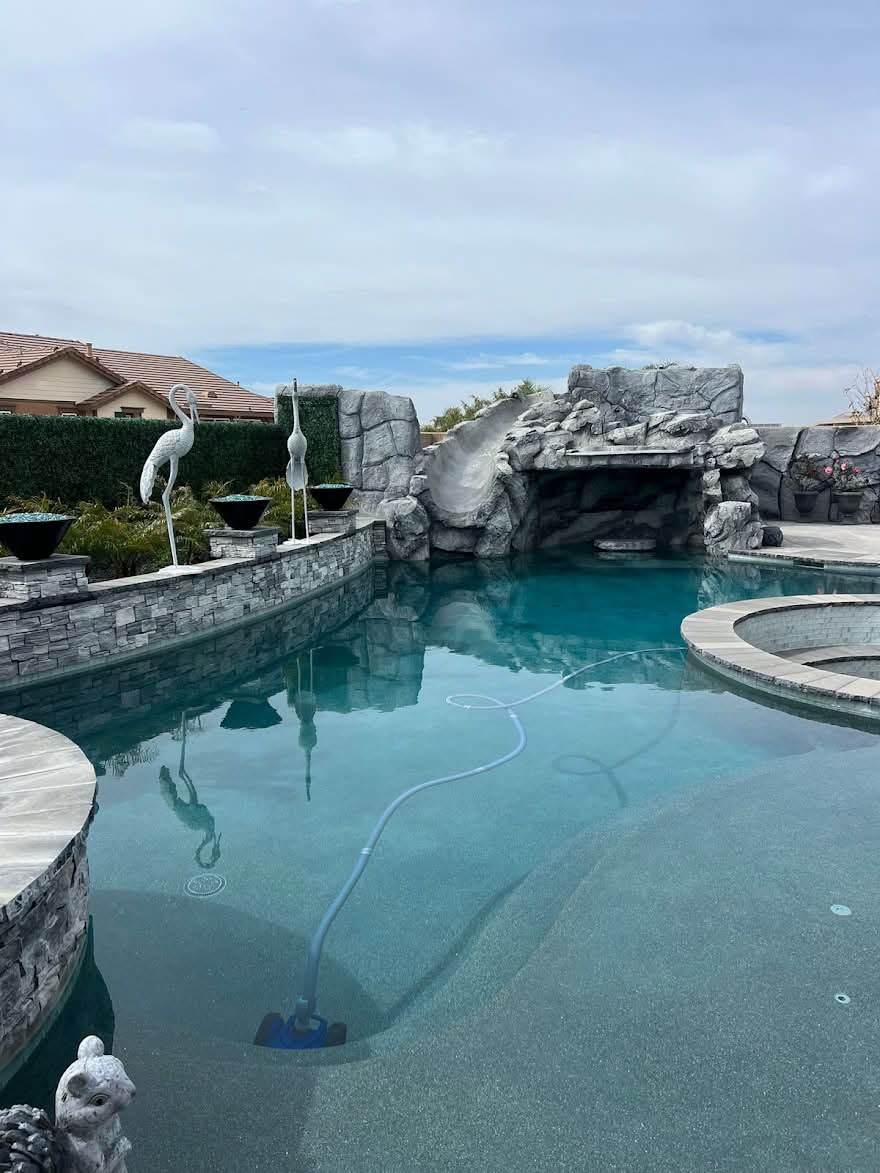
A patch is visible. Plaster patches almost never colour match, and anyone promising an invisible patch on a fifteen year old pool is overselling. New plaster next to fifteen years of weathered plaster reads as new plaster, in any light.
So the decision is about where the damage is rather than how big it is. Small chip in an out of the way spot, patch it. Visible wall at the shallow end, replaster. If the surface is still sound everywhere else, see pool repair and spend the money on the part that is actually broken.
Where we work
Los Angeles and the surrounding San Gabriel Valley and east San Fernando Valley: Pasadena, Glendale, Burbank, Sherman Oaks, Arcadia and La Cañada. If you are nearby and not on that list, call and ask.
Find out which job you are looking at
Send a few photos of the surface and the waterline and we will tell you whether you need a patch or new plaster, before anyone comes out. Request a quote or call (714) 584-7424.
Tell us about your pool
Photos of the surface and the waterline are enough to start. We will tell you what you are looking at before anyone comes out.